Bureau-certified translation
Certified translation with the PRAVIS bureau seal
Most everyday certified translations — school records, medical results, driver's licences, personal documents — don't need a court-appointed sworn translator. They need a careful, accurate translation certified with an official bureau seal and a signed statement of accuracy. That's what we provide, and we'll tell you plainly if your specific case needs more.

Bureau seal vs. sworn translation — what's actually different
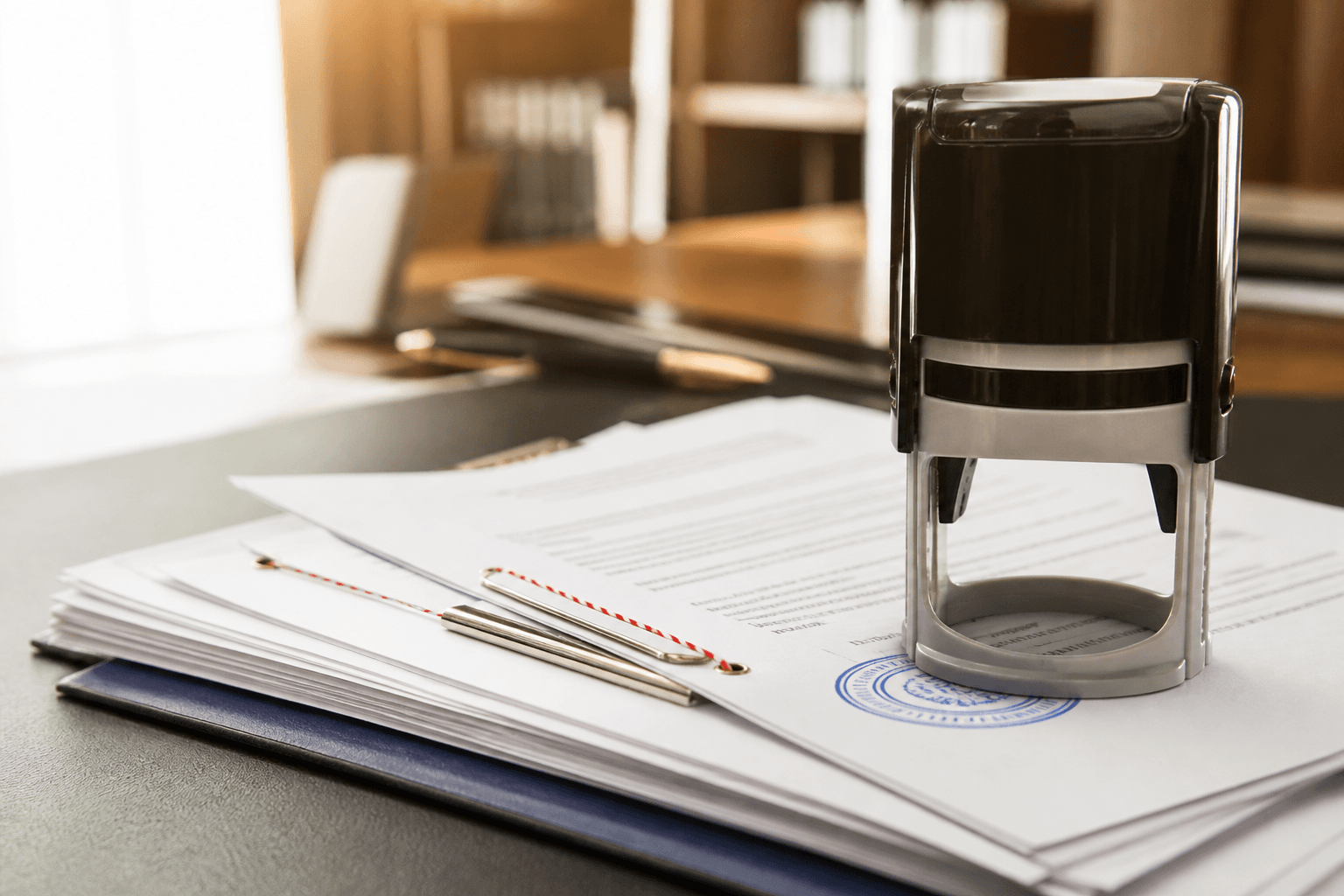
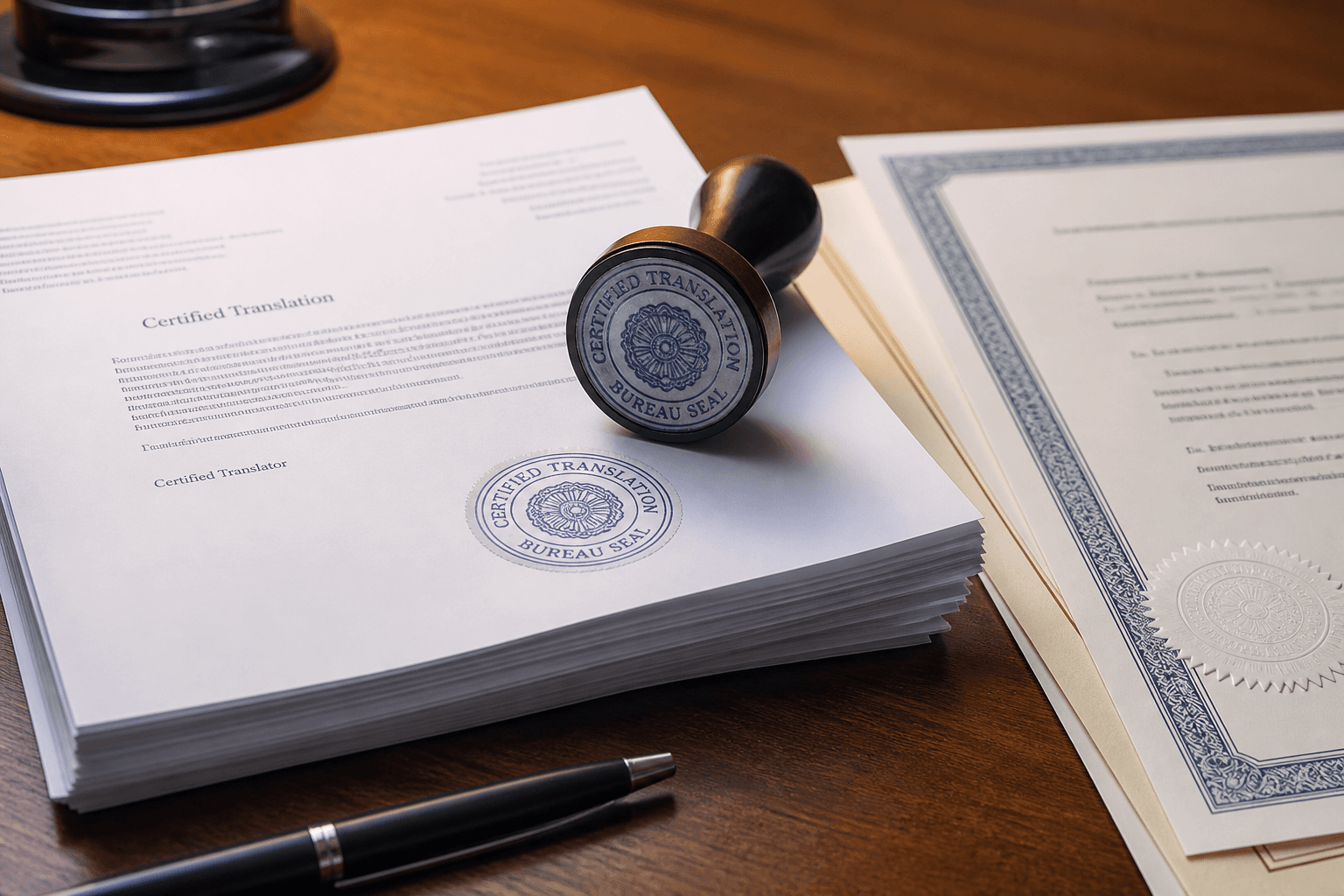
A bureau-sealed certified translation is produced by a qualified translator and certified by PRAVIS as a company: our seal, a signed declaration that the translation is complete and accurate, a reference number, and our contact details for verification. It confirms professional accountability for the translation.
A sworn translation, by contrast, is issued by a tłumacz przysięgły — an individual translator appointed by the Polish Ministry of Justice, entered in an official register, with a personal seal and a specific legal status. In Poland, sworn translations are required for court filings, most USC (civil registry) procedures, some notarial acts, and certain government submissions.
For most school, medical, and personal-document use abroad, a bureau seal is sufficient and considerably faster to arrange. When it isn't, we say so before you pay for anything.
Documents we certify most often
The majority of our certified-translation requests fall into a few recurring categories. School and university documents: transcripts, diplomas, enrollment letters, and reference letters for admissions or exchange programmes abroad. Medical documents: test results, discharge summaries, vaccination records, and short medical certificates for insurers, employers, or clinics.
Driver's licences: a common and specific case — translating a driver's licence so it can be presented alongside the original when renting a car abroad, since many rental companies require a certified translation if the licence isn't in a language they recognise.
We also handle personal documents such as birth and marriage certificates, employment references, and bank statements, when a sworn translation isn't specifically required by the recipient.
Send your documents for a free review
We'll check page count, complexity, and any special requirements, then confirm a fixed price and turnaround — usually within 5–7 minutes.
Send files nowHow the process works
Send us clear scans or photos of your documents through the quote form. We review the content, page count, and formatting, then confirm a fixed price and turnaround — typically within 5–7 minutes of receiving your files.
Once you approve the quote, we translate, format the document to mirror the original layout where possible, and certify it with our bureau seal, a signed accuracy statement, and a unique reference number. You receive a digital PDF; a printed hard copy by courier is available on request for institutions that ask for physical certification.
When you actually need a sworn translator instead
We'd rather tell you this before you order than after. A sworn (tłumacz przysięgły) translation is typically required for: Polish court proceedings, filings with the Civil Registry Office (USC) — for example when registering a foreign birth or marriage certificate in Poland, some notarial procedures, and certain government or immigration submissions where the receiving authority explicitly asks for a document 'certified by a court-appointed translator'.
If your case falls into one of these categories, we'll flag it during review and can arrange a sworn translation through our network of registered tłumacze przysięgli, usually at a longer turnaround than our standard bureau-sealed service.
Formats, delivery, and turnaround
We deliver a certified PDF by default, formatted to closely follow your original document's structure — headings, tables, stamps, and signatures are described and positioned to match. If your recipient specifically requires a wet-ink signature or a physically stamped copy, we can courier a printed original; this takes longer and is priced separately.
Rush requests are possible for urgent cases such as upcoming appointments or deadlines — mention this when you submit your files, and we'll confirm whether it's feasible before you commit.
Accuracy, confidentiality, and no guarantees we can't make
Every translation goes through a second-pass review before certification. Documents are handled confidentially and are not shared beyond the translator and reviewer assigned to your order.
We're direct about limits: we cannot guarantee that a school, clinic, employer, consulate, or car-rental company will accept any specific certification format — acceptance criteria are set by the receiving institution and vary by country. If you're unsure, ask the recipient what they require before ordering, or tell us and we'll advise based on similar past cases.
Frequently asked questions
What exactly does a 'bureau seal' certify?
It certifies that PRAVIS, as a professional translation bureau, takes responsibility for the accuracy and completeness of the translation. The seal, a signed statement, and a reference number appear on the document so the recipient can verify it came from us.
What's the difference between a bureau seal and a sworn translator?
A bureau seal is our company's certification of a translation's accuracy. A sworn translation is issued personally by a tłumacz przysięgły registered with the Polish Ministry of Justice and carries a specific legal status required for courts, the Civil Registry Office (USC), and some official Polish procedures. Most school, medical, and personal-use cases only need a bureau seal; we'll tell you if yours needs more.
Can you translate my driver's licence for renting a car abroad?
Yes — this is one of our most common requests. We translate and certify the licence so you can present it alongside the original. Rental companies set their own acceptance rules, so if possible, confirm with them in advance what format they expect.
Do you handle school and medical documents?
Yes, regularly — transcripts, diplomas, enrollment letters, medical certificates, test results, and vaccination records are among our most frequent orders.
How long does a certified translation take?
We typically confirm a quote and turnaround within 5–7 minutes of reviewing your files. Actual translation time depends on length and complexity; short documents are often ready within a few working days, and rush options exist for urgent cases.
Do you guarantee the translation will be accepted?
No — and we wouldn't trust a bureau that claims otherwise. Acceptance depends entirely on the receiving institution's own rules, which vary by country and change over time. We follow standard certification practice and flag known cases where a sworn translator is legally required, but final acceptance is always the recipient's decision.