
Legalization support
Apostille support and translation
An apostille is issued by a state authority, not by us — but knowing which authority, in what order relative to translation, and whether the translation itself needs to be sworn is where most people get stuck. We help you work through that, and handle the translation once the order of operations is clear.
What an apostille actually does
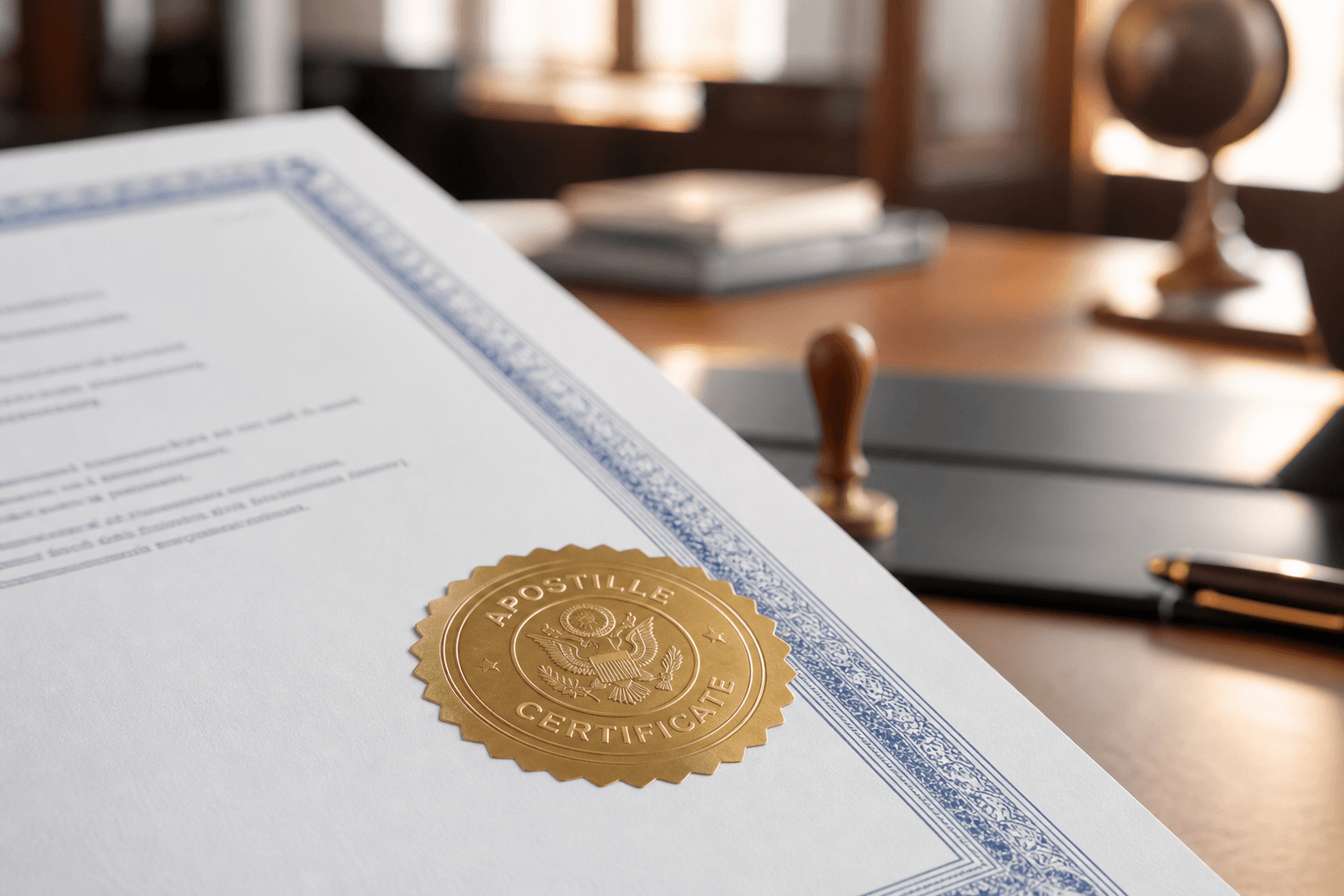
An apostille doesn't translate or interpret a document — it authenticates the signature and seal of the official who issued or certified the original document, so that a receiving country party to the Hague Apostille Convention (1961) accepts it without additional consular legalisation. It's a stamp on the original (or a certified copy), not a substitute for translation.
This matters for a common mix-up: an apostille and a certified translation solve two different problems. You may need one, both, or both in a specific order — and that order depends entirely on what the destination country and specific institution ask for.
How PRAVIS helps, and what we don't do
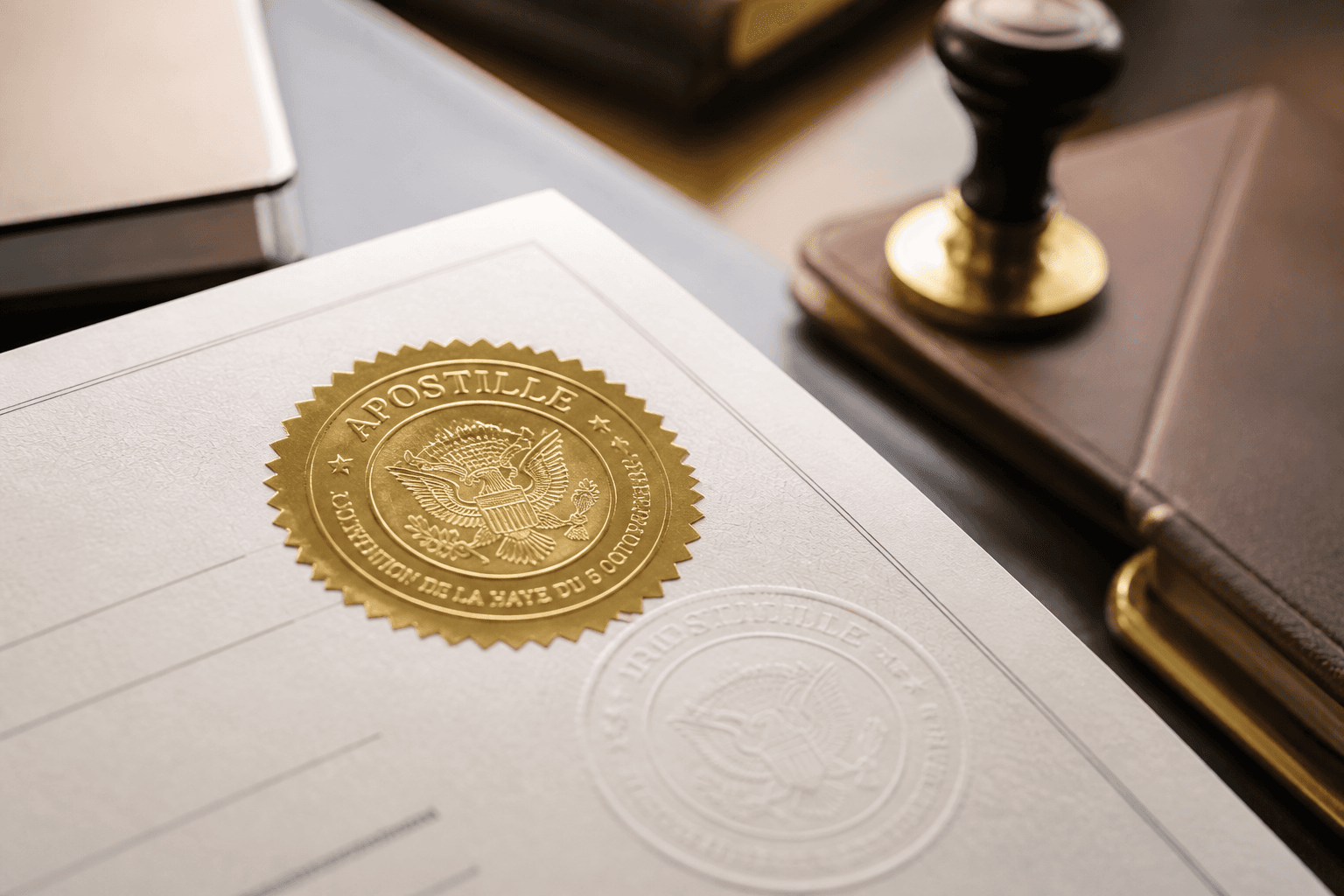
We don't issue apostilles ourselves — that's a state function, handled in Poland by specific ministries, courts, or notarial chambers depending on the document type. What we do: review your document and intended destination, tell you which type of authority typically issues the apostille for that document category, and advise on the usual sequencing for your target country based on similar past cases.
We then handle the translation — before or after the apostille is affixed, as required — and certify it with our bureau seal. If the destination country requires the translation itself to be sworn (or requires the apostille to cover the translator's signature specifically), we arrange that through our sworn-translator network and say so clearly before you commit.
Not sure which process your document needs?
Tell us the document and its destination — we'll clarify whether you need an apostille, a sworn translation, both, or a specific order, before quoting the translation part.
Send files nowDocuments that commonly need an apostille
Birth, marriage, and death certificates used for family or immigration matters abroad. Educational documents — diplomas and transcripts — for study or professional recognition applications. Corporate documents such as extracts from the business register, powers of attorney, and notarial deeds used in cross-border transactions. Single-status and no-criminal-record certificates for marriage or long-stay visa applications.
Whether your specific document needs an apostille depends on both the destination country's participation in the Hague Convention and the requesting institution's own rules — we help you check this before you start the process, not after.
Typical process and timeline
Send us the document and tell us its destination and purpose. We identify the likely issuing authority for the apostille and the usual order of operations for that country, then quote our part — the translation — separately from the apostille itself.
The apostille is obtained from the relevant government authority; its timeline depends on that authority's own processing queue, which we don't control and can't guarantee. Our translation turnaround is typically 5–7 minutes for a quote once we've reviewed your files, with delivery time depending on length and complexity.
Apostille, legalisation, and sworn translation — not the same thing
These three terms get mixed up constantly, so here's the short version. Apostille: authenticates a signature or seal for use in a Hague Convention country. Consular legalisation: the older, more involved process for countries not party to the Convention, usually requiring multiple government stamps. Sworn translation: a translation carrying the legal weight of a court-appointed tłumacz przysięgły — separate from either apostille or consular legalisation, though sometimes required alongside one of them.
We help identify which combination your specific case needs, based on destination country and receiving institution, before you pay for anything.
What we can and can't promise
We can promise a careful review of your case, an honest answer about which authority typically handles the apostille for your document type, an accurate translation certified appropriately, and a clear quote for our part of the work within 5–7 minutes.
We can't promise a specific apostille processing time — that's set by the issuing government authority — and we can't guarantee that any given country or institution will accept a specific document, translation, or apostille combination, since requirements are set externally and do change. When in doubt, we recommend confirming directly with the receiving institution before finalising your documents.
Frequently asked questions
Does PRAVIS issue apostilles?
No. An apostille is issued by a designated state authority — a ministry, court, or notarial chamber, depending on the document. We help you identify the right authority and handle the translation, but the apostille itself comes from the government.
Bureau seal vs sworn translator — which do I need for an apostilled document?
It depends on the destination. A bureau-sealed translation is enough for many everyday uses, but some countries and institutions require the translation to be sworn — done by a tłumacz przysięgły — especially when the apostille needs to cover the translator's own signature. We check this with you before starting the translation.
Should I translate the document before or after getting the apostille?
It depends on the destination country's rules — some want the apostille on the original first, then a translation of the apostilled document; others want the translation apostilled directly. We help you confirm the correct order for your specific case.
How long does getting an apostille take?
That's set by the issuing government authority, not by us, so we can't promise a timeline for the apostille itself. We quote our translation turnaround separately, typically within 5–7 minutes of reviewing your document.
Can you obtain the apostille for me?
In some cases we can coordinate submission logistics, but the apostille is always issued by the relevant state authority — we can't guarantee timelines or outcomes on their end, and some jurisdictions require the document holder to apply in person or through a specific channel.
What if my destination country isn't part of the Hague Convention?
Then an apostille won't be recognised, and you'll likely need consular legalisation instead — a different, usually longer process. Tell us the destination and we'll advise whether apostille or legalisation applies before you proceed.