Education documents
Certified translation of a diploma
Whether you are applying to a university, seeking job recognition, or preparing a visa pack, a diploma translation is often the first education document you need. We certify it with the PRAVIS bureau seal — and we tell you when recognition offices in Poland, Germany, or Spain may ask for a sworn translator or an apostille on the original.
When a diploma translation is needed
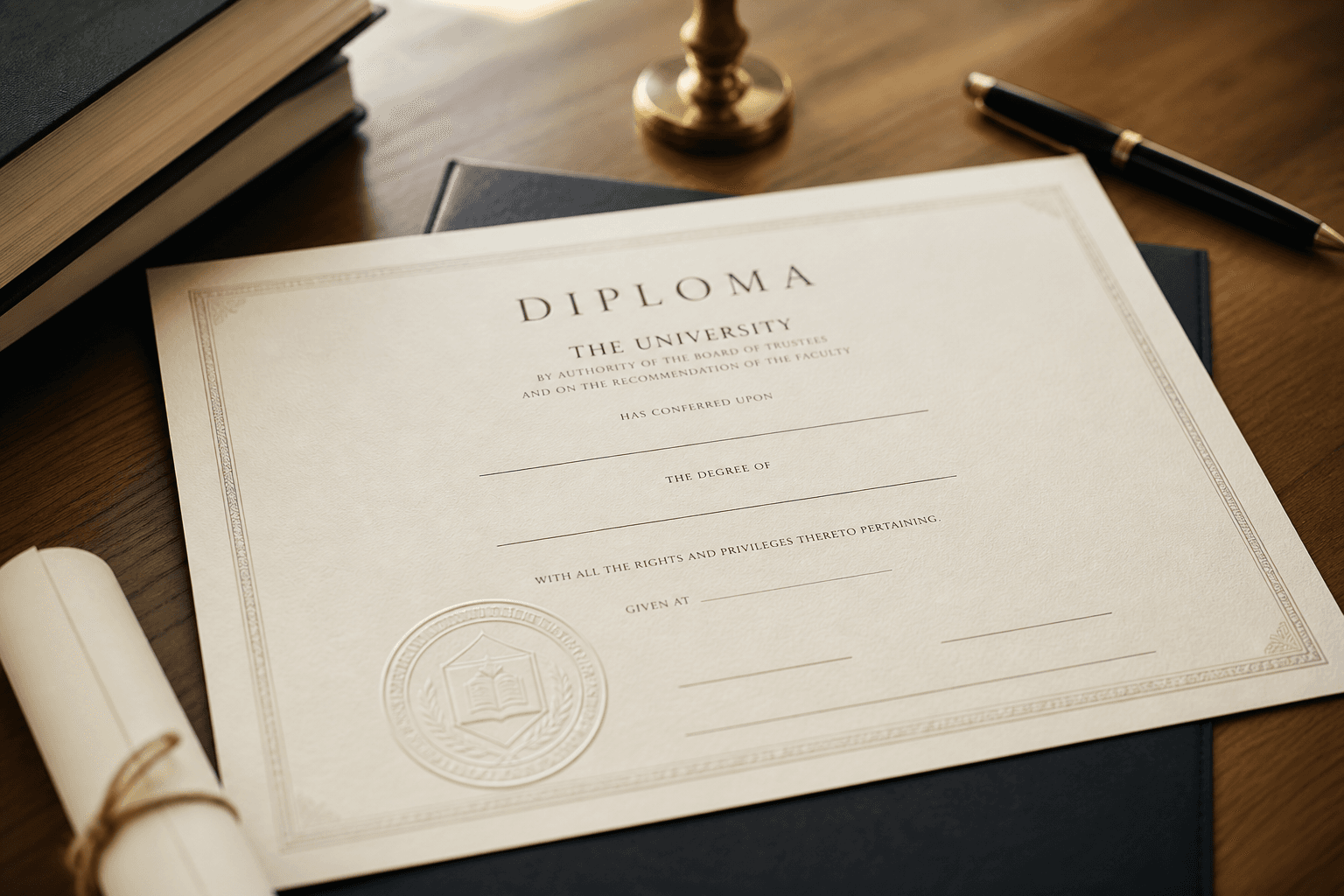
Typical uses: university admissions and exchange programmes, job applications, regulated-profession recognition, visa and residence packs that list education, and professional licensing abroad. Admissions and HR often accept a bureau seal; formal Anerkennung offices may not.
Bureau seal vs. sworn translation vs. apostille
Our default is a certified translation with the PRAVIS bureau seal: accurate rendering, company stamp, signed statement, and reference number — the same approach as our certified-translation service.
Recognition offices (e.g. Anerkennung in Germany, nostryfikacja in Poland) and some chambers may require a sworn / beglaubigte / jurada translation; we flag this when your destination suggests it. An apostille legalises the original in the country of issue; it is separate from translation and not issued by PRAVIS — see also our apostille support. Final requirements are set by the receiving institution.
Need a certified translation of your diploma?
Send a clear scan or photo to office.pravis@gmail.com or through the quote form — we reply in 5–7 minutes with price and whether a bureau seal is enough. HQ in Wrocław, delivery worldwide.
Send files nowHow the process works from Wrocław
Send a clear scan or photo of every page (seals and annotations visible) via the quote form or office.pravis@gmail.com. We reply within 5–7 minutes with a fixed price, turnaround, and whether a bureau seal is likely enough or a sworn route is safer for your destination — for example Poland, Germany, or Spain.
After confirmation we translate, format to mirror the original where useful, and certify with the PRAVIS bureau seal. You receive a certified PDF; we can mail or courier a stamped paper original worldwide from our Wrocław office.
What we need from you
A clear scan of the full diploma (front and back if stamped), target language, and — if known — the university, employer, or recognition office. Names, degree titles, and dates must match the original.
No guarantees we cannot make
We do not guarantee that a particular school, registry, university, consulate, employer, or other office will accept a given certification format. Requirements vary by country and change over time. We follow standard bureau-seal practice for certified translation, flag known sworn or apostille cases, and leave the final decision to the receiving authority.
Frequently asked questions
Is a bureau seal enough for diploma recognition abroad?
For many university admissions and employers, yes. For formal Anerkennung or ministry recognition, a sworn translator is often required. Confirm with the receiving office or tell us which one it is.
Do I need an apostille as well as a translation?
Sometimes. An apostille authenticates the original for use abroad under the Hague Convention; it is issued in the country of origin, not by PRAVIS. Many everyday recipients only ask for a certified translation. If your checklist mentions apostille, we can advise on the typical sequence.
Will this translation be accepted by my school, office, or consulate?
Often yes for everyday private and school use with a bureau seal — but acceptance is always decided by the receiving institution. Tell us the country (e.g. Poland, Germany, Spain) and office if you know them; we recommend honestly before you order.
Does translation guarantee my diploma will be recognised?
No. Translation is separate from academic or professional recognition. The university or recognition authority decides equivalency.
How fast can I get a quote?
Usually within 5–7 minutes of receiving a clear scan at office.pravis@gmail.com or via the form. Translation turnaround depends on length and language pair.